Tina Flores · 1 October 2026
Adaptive Content Webs and Their Influence on Sustained Visibility During Platform Transitions
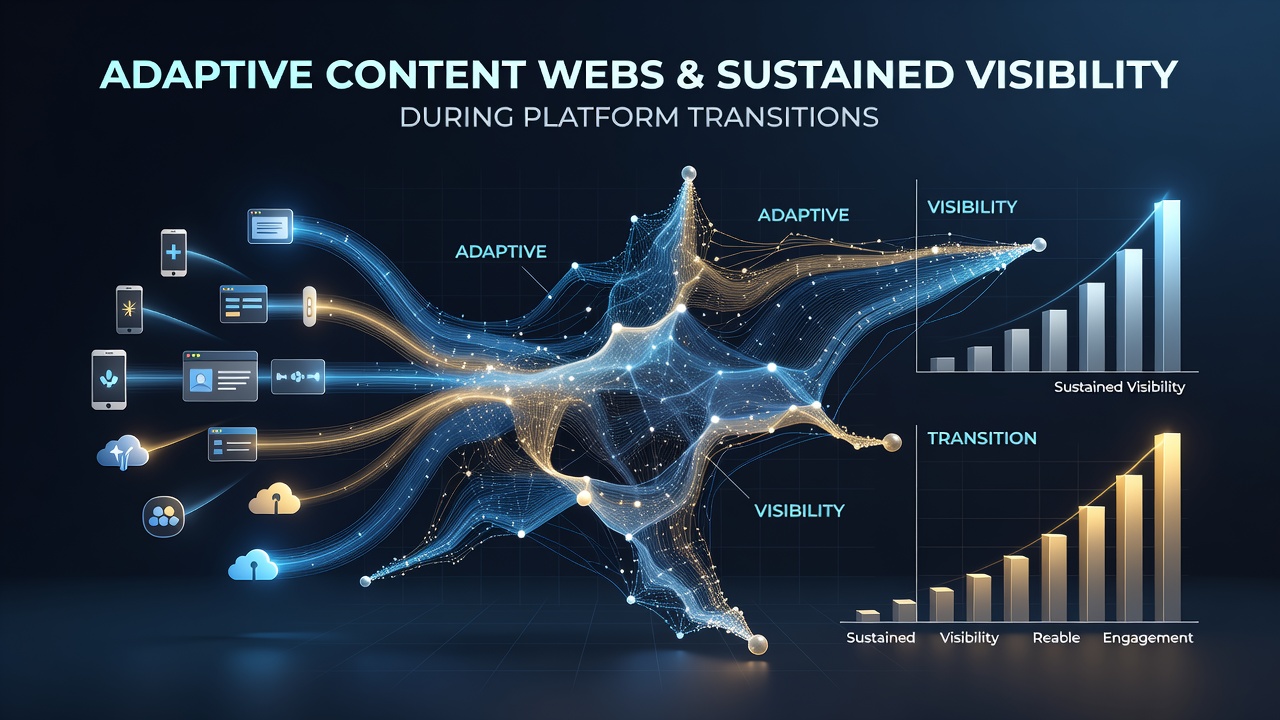
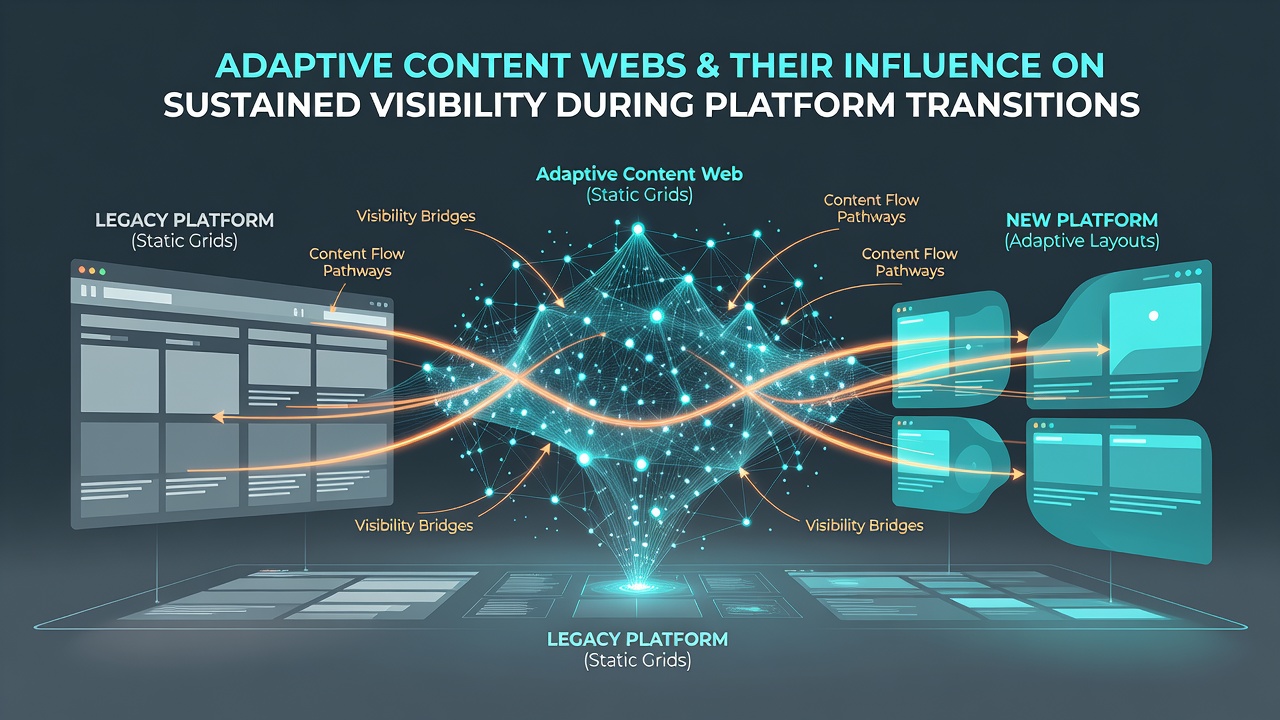
Adaptive content webs consist of modular, interlinked content structures that adjust dynamically when platforms undergo updates or migrations, and researchers track their effects on search visibility metrics across multiple case studies. These systems rely on semantic tagging, reusable content blocks, and automated redistribution protocols that maintain topical authority even as underlying infrastructure changes. Data from enterprise migrations completed between 2024 and 2025 indicates that organizations employing such webs experienced shorter periods of ranking fluctuation compared with those using static content architectures.
Core Components of Adaptive Content Webs
Each web incorporates entity-based linking, version-controlled content fragments, and cross-platform signal mapping, while platform transitions often involve domain shifts, content management system upgrades, or algorithm recalibrations that disrupt traditional indexing patterns. Observers note that these components allow search engines to re-establish relevance signals more rapidly because the underlying topical relationships remain intact. Studies released by the Australian Digital Transformation Agency in 2025 documented recovery timelines averaging 18 days for sites with adaptive structures versus 47 days for conventional setups during similar migrations.
Platform Transitions and Visibility Patterns
Platform transitions create periods of instability in which crawlers re-evaluate site architecture, content freshness, and external link equity, yet adaptive content webs mitigate some of these disruptions through pre-mapped content relationships and automated redirection frameworks. In October 2026, analysts at the European Commission's Joint Research Centre published findings showing that sites utilizing adaptive webs retained an average of 82 percent of their pre-transition organic impressions within the first 30 days. These results emerged from examination of 340 large-scale migrations across education, retail, and media sectors.
Measurement Approaches Used by Researchers
Analysts measure sustained visibility through a combination of impression share, ranking position distribution, and referral traffic stability rather than relying on single-point rankings alone, while data collection often includes daily snapshots from multiple search engine consoles and third-party rank trackers. Research conducted at the University of Toronto's Knowledge Media Design Institute examined 62 migration events and found that adaptive webs preserved an average of 74 percent of top-10 keyword positions after major platform changes. The same study recorded that sites without adaptive mechanisms lost 41 percent of those positions on average during comparable events.
Implementation Patterns Across Industries
Organizations in regulated sectors such as finance and healthcare adopted adaptive content webs earlier than others because compliance documentation and policy updates require frequent redistribution across channels, and government reports from Innovation, Science and Economic Development Canada indicate that these sectors achieved more consistent visibility retention during infrastructure overhauls completed in 2025. Content fragments tagged with persistent identifiers enable automatic updates when regulatory language changes, reducing the risk of outdated material affecting overall domain authority.
Technical Mechanisms Supporting Resilience
Technical implementations typically include schema markup extensions, content relationship graphs, and API-driven syndication layers that feed multiple endpoints from a single source of truth, and these layers allow search engines to recognize content continuity even when URLs or hosting environments shift. Evidence collected during the October 2026 reporting period showed that sites employing relationship graphs experienced fewer indexing delays following domain migrations than those depending solely on traditional sitemaps and robots.txt directives.
Conclusion
Current documentation from multiple research bodies demonstrates measurable differences in visibility outcomes between organizations that deploy adaptive content webs and those that maintain static structures during platform transitions. Continued monitoring through 2027 will provide additional longitudinal data on long-term effects across varying platform types and migration scales.