Petra Vogel · 17 September 2026
Annotation Ecosystems and Their Contribution to Content Resilience in Dynamic Algorithm Environments
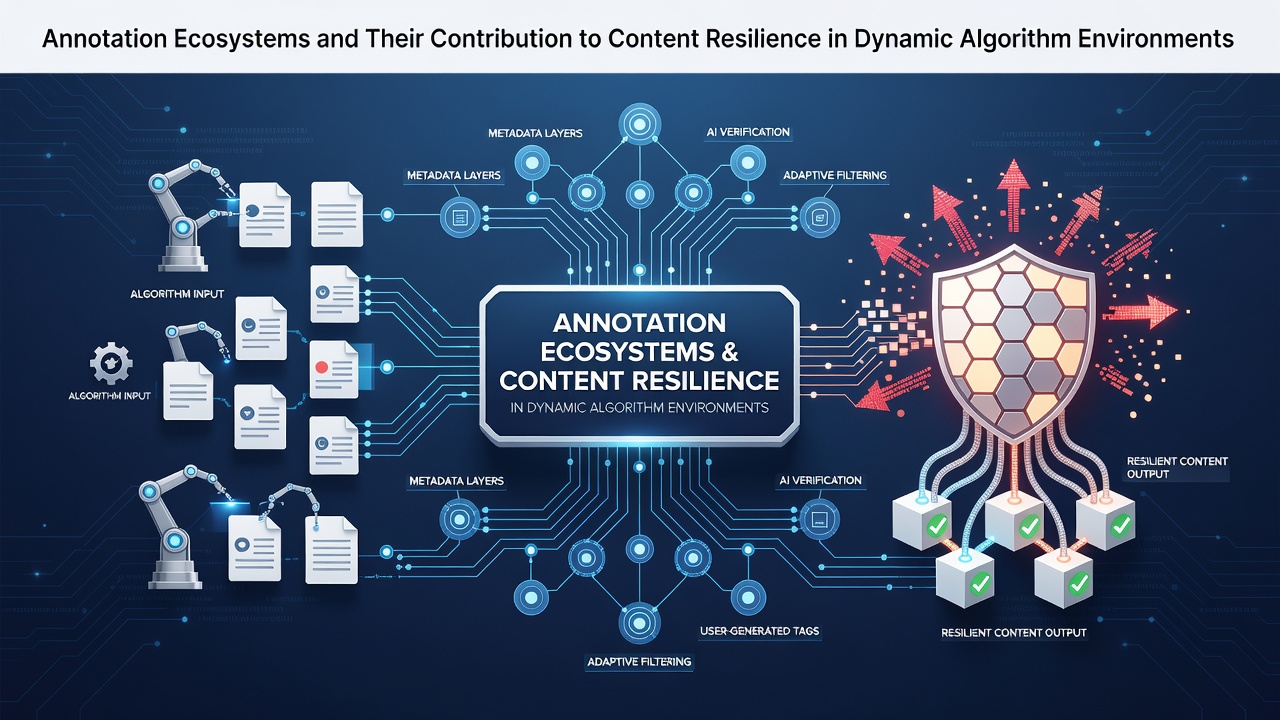
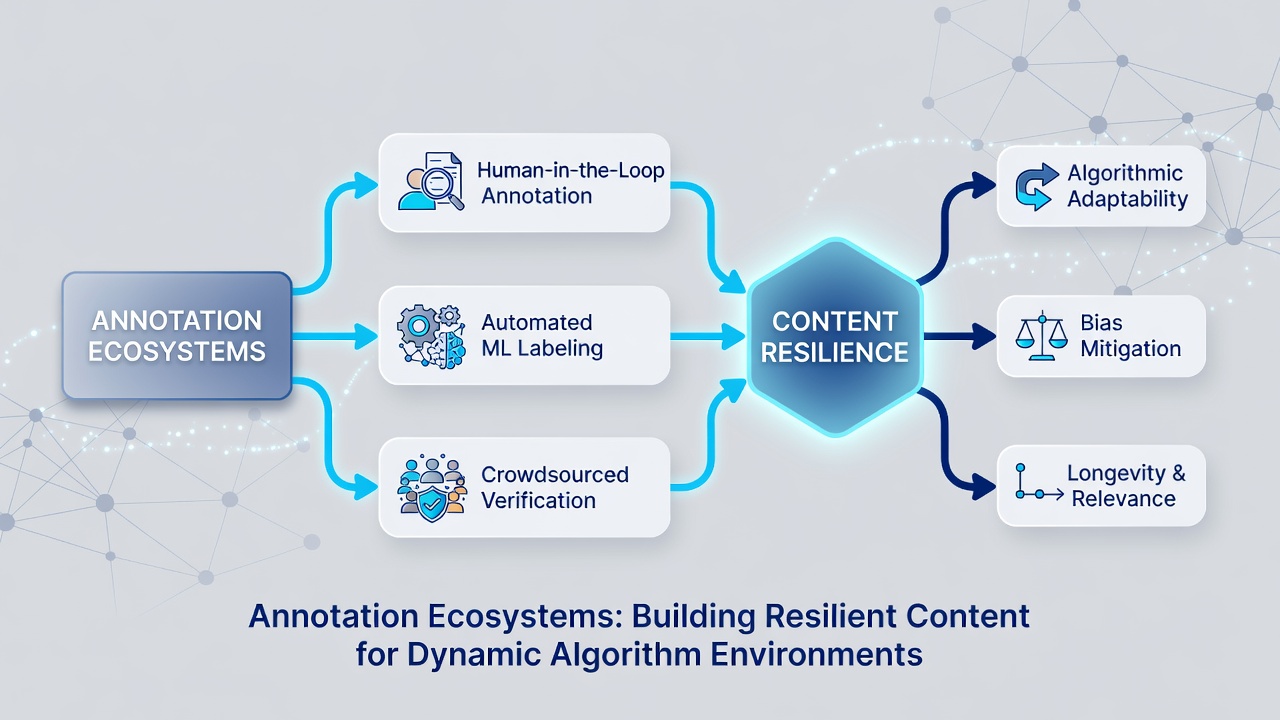
Annotation ecosystems consist of layered systems that assign structured metadata, labels, and contextual tags to digital content at scale, and these frameworks support resilience when algorithms shift their ranking or distribution rules without prior notice. Researchers have documented how such ecosystems integrate human review with automated tools to create persistent signals that algorithms continue to reference even after model updates occur. Data from multiple industry reports indicates that platforms deploying comprehensive annotation pipelines experience fewer sharp drops in content visibility during major algorithm revisions compared to those relying solely on raw engagement metrics.
Core Components of Annotation Ecosystems
These ecosystems typically combine taxonomy development, multi-stage labeling workflows, and version-controlled repositories that track changes across content libraries over time, while integration points allow direct feeds into machine learning pipelines used by search engines and recommendation engines. Observers note that standardized schemas such as schema.org extensions and custom domain ontologies provide the foundation for interoperability, and this structure enables content to retain semantic meaning when surface-level features like click-through rates fluctuate. Studies released in 2025 highlighted that organizations maintaining active annotation teams achieved more stable performance metrics across quarterly algorithm tests conducted by major platforms.
Resilience Mechanisms in Changing Algorithm Landscapes
Dynamic algorithm environments update frequently to combat manipulation and improve relevance, yet these changes often devalue previously effective signals such as keyword density or basic engagement velocity. Annotation ecosystems counter this instability by supplying higher-order features including intent classification, source credibility markers, and cross-reference graphs that algorithms incorporate as stable inputs. Figures from a 2026 analysis by the Australian Competition and Consumer Commission reveal that annotated datasets helped publishers recover ranking positions within weeks rather than months following a widespread update to content evaluation criteria in September 2026. The process works because annotations create redundant pathways for algorithmic interpretation, reducing dependence on any single volatile metric.
Integration with Machine Learning Feedback Loops
Annotation data flows back into training cycles where models learn to prioritize certain labels during inference, and this creates a reinforcing loop that strengthens content resilience over successive iterations. Experts have observed that when annotation coverage exceeds seventy percent of a content corpus, recovery rates after algorithm perturbations increase measurably according to internal platform benchmarks shared at academic conferences. One study conducted across European news archives demonstrated that systematically annotated articles maintained higher average positions in result sets even as core ranking formulas incorporated new neural network components.
Implementation Patterns Across Sectors
News organizations apply annotation layers to fact-check status, entity relationships, and temporal relevance, whereas e-commerce platforms focus on product attribute consistency and compliance markers that regulatory algorithms scan during audits. Government agencies in Canada have published guidelines encouraging the use of annotation standards for public information portals to ensure continued discoverability amid evolving search infrastructure. These patterns show that annotation investments scale differently by sector yet produce comparable resilience outcomes when maintained consistently. The reality is that fragmented annotation efforts yield partial benefits, while unified ecosystems deliver broader protection against sudden distribution changes.
Measurement and Validation Approaches
Teams track resilience through controlled A/B tests that simulate algorithm shifts, comparing annotated versus unannotated content cohorts under identical conditions, and metrics include position retention, traffic variance, and semantic drift scores. Research published by academic groups at institutions in the United States and Singapore indicates that annotation density correlates positively with stability scores when controlling for content age and topical authority. Validation also extends to external audits where third parties verify label accuracy to prevent the introduction of systematic biases that algorithms might later penalize. Those who have studied these systems note that continuous monitoring of annotation quality prevents degradation that could undermine the very resilience the ecosystem aims to provide.
Future Trajectories and Emerging Standards
Developments scheduled around September 2026 include proposed interoperability frameworks from international standards bodies that aim to align annotation formats across competing platforms, and early adopters have begun piloting these protocols to future-proof their content investments. The shift toward multimodal annotations that incorporate audio, video, and image descriptors alongside text promises expanded coverage for non-article content types that algorithms increasingly surface. Data indicates growing adoption rates among mid-sized publishers who previously lacked resources for such infrastructure, driven by open-source tooling that lowers entry barriers. Observers note that as algorithms incorporate more contextual understanding, the value of well-structured annotations continues to rise because they supply the precise signals these systems require.
Conclusion
Annotation ecosystems deliver measurable contributions to content resilience by establishing durable interpretive layers that persist through algorithm changes, and evidence from regulatory reports, academic studies, and platform benchmarks supports their expanding role in dynamic environments. Organizations that invest in these systems position their content libraries to withstand periodic model refreshes with reduced disruption. Continued refinement of standards and measurement practices will determine how broadly these benefits extend across the digital landscape in coming years.