
Xander Sullivan · 12 November 2026
Reimagining Team Knowledge Sharing Through Adaptive Linking Protocols in Note Management Applications
Adaptive linking protocols enable note management applications to create dynamic connections between entries based on contextual relevance rather than static user-defined tags or folders. These protocols analyze content patterns, user interactions, and project timelines to establish links automatically while allowing manual overrides when teams require precise control. Data from collaborative platforms shows increased retrieval speeds when such systems replace traditional hierarchical structures.
Core Mechanisms Behind Adaptive Linking
Systems detect semantic similarities across documents through natural language processing techniques that map relationships between ideas even when terminology varies between team members. When one note references a concept already documented elsewhere, the protocol generates bidirectional connections that update as content evolves. Researchers at distributed knowledge labs have documented how these updates maintain consistency across versions without requiring constant manual intervention from editors.
Permission layers integrate directly into the linking process so sensitive materials remain accessible only to authorized participants while still contributing to broader pattern recognition within the system. Teams working across time zones benefit because links surface relevant context regardless of when individual contributions occur. Studies conducted by the Australian Institute of Digital Innovation indicate measurable reductions in duplicate work when protocols surface existing notes during initial drafting stages.
Practical Applications in Distributed Teams
Engineering groups use these protocols to connect bug reports with design specifications and meeting summaries automatically as new information enters the repository. Marketing departments apply similar processes to align campaign briefs with performance data and competitor analyses without maintaining separate spreadsheets for cross-referencing. The connections strengthen over time as usage patterns refine the weighting algorithms that determine link priority.
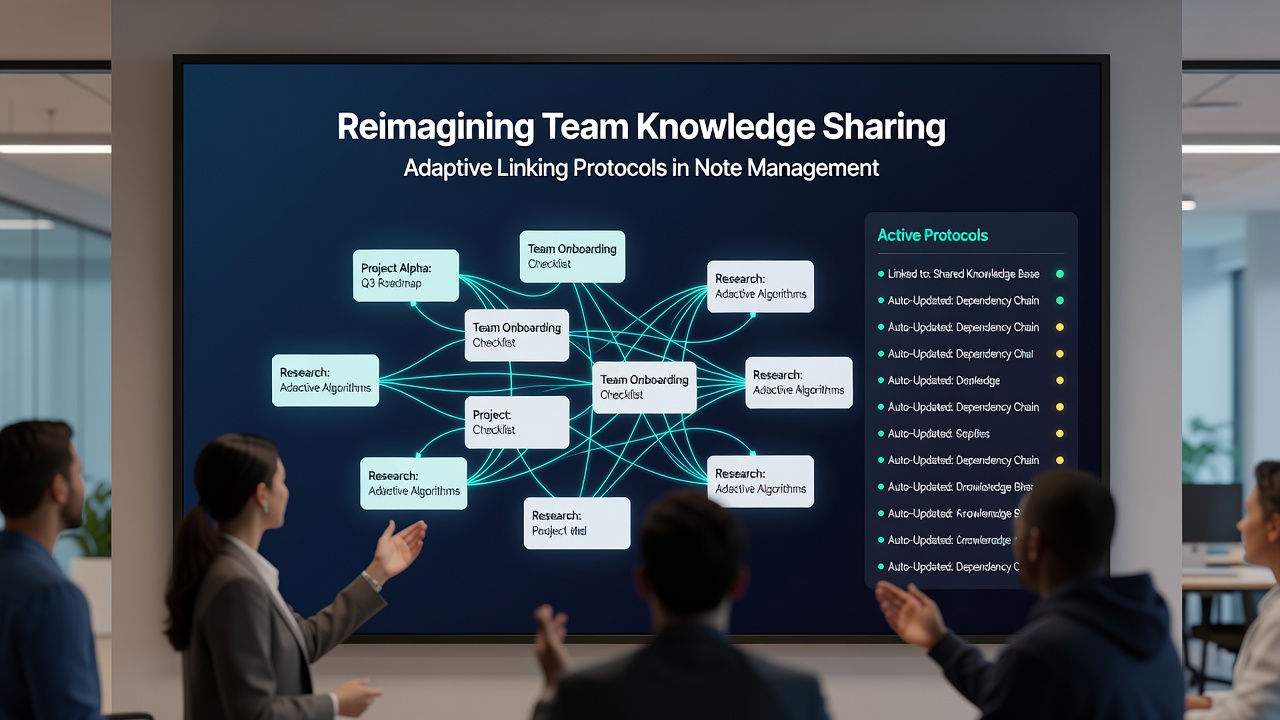
Training materials for new hires incorporate live links that surface updated procedures as policies change instead of relying on static onboarding documents. Observers note fewer instances of outdated information circulating when protocols refresh connections based on recency and usage frequency. European Commission reports on workplace digital tools highlight efficiency gains in sectors that adopted context-aware linking during large-scale remote transitions.
Integration With Existing Workflows
Most implementations begin with API connections to calendar systems and communication platforms so meeting notes link automatically to action items generated during discussions. Version control features ensure earlier iterations remain accessible through the same adaptive pathways while newer content receives higher visibility rankings within search results. Teams that combine these protocols with regular review cycles report smoother handoffs between project phases.
Security protocols require encryption of link metadata alongside note content to prevent unintended exposure of relationship data. Canadian government guidelines on collaborative software emphasize the importance of audit trails that track both automated and manual link modifications. Integration testing across multiple note applications has demonstrated compatibility when protocols adhere to open standards for metadata exchange.
Developments Scheduled Around November 2026
Industry conferences planned for November 2026 will showcase updates to adaptive linking algorithms that incorporate real-time collaboration signals from multiple simultaneous editors. Early demonstrations reveal improved conflict resolution when two team members edit linked notes concurrently. Pilot programs running through university research partnerships continue to generate datasets on long-term retention of institutional knowledge under these systems.
Platform providers have scheduled compatibility expansions that allow linking across previously siloed applications while preserving granular access controls. Data collected through these expansions will inform refinements to relevance scoring models used by the protocols.
Conclusion
Adaptive linking protocols continue to reshape how teams organize and retrieve shared knowledge by replacing rigid structures with responsive connections. Evidence from multiple sectors demonstrates consistent improvements in information accessibility when applications implement these systems with appropriate security and governance measures. Ongoing refinements scheduled through late 2026 suggest further integration opportunities across diverse professional environments.